
The method
How Pianoforall works
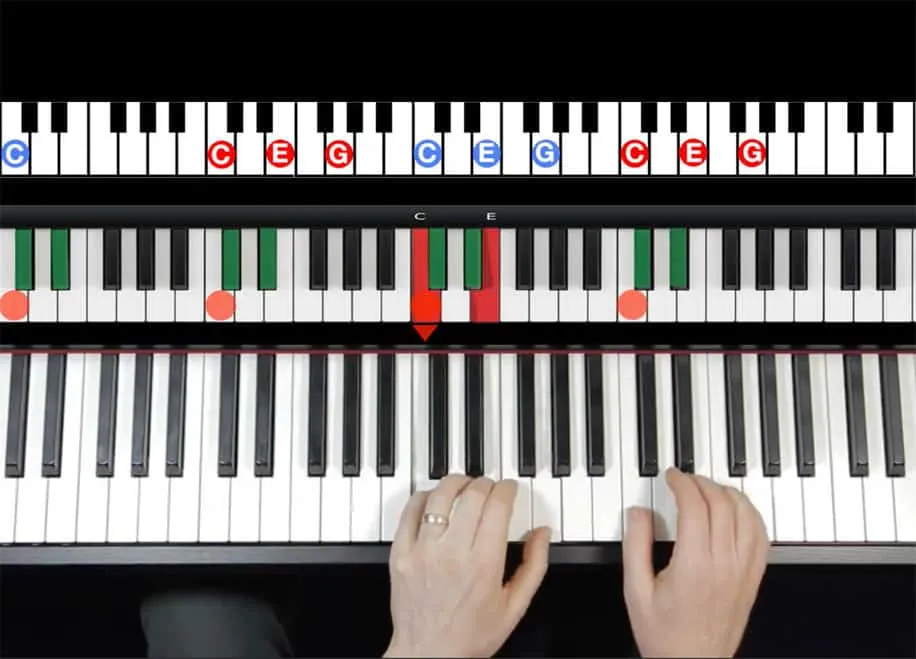
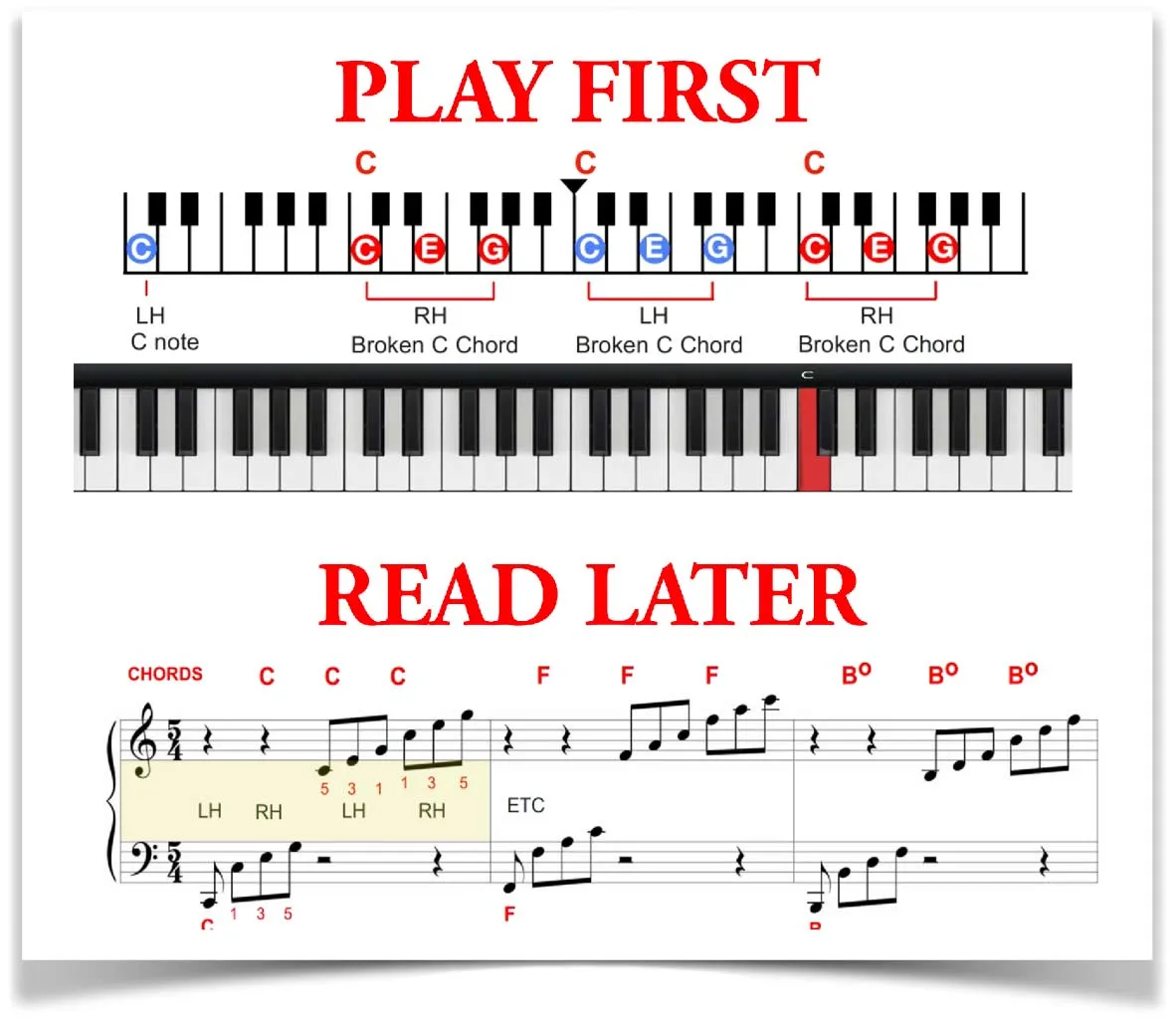
Pianoforall teaches chords and rhythm patterns first, so both hands play music from the first lessons. You learn to play by ear, then reading and theory come in gradually, once the notes already mean something. Robin calls it “play first, ask questions later”.
Most courses teach piano backwards
Traditional lessons start with the stave, note names, scales and simple tunes in one hand. It can be months before you play anything you’d want to play for a friend. Adults with jobs and families often stop there.
You learned to speak long before you learned to read. Pianoforall applies the same idea to the piano. You copy and play first. Reading comes later, and it’s easier because you already know what the notes sound like.
Three steps, repeated
Play, learn, understand
Play
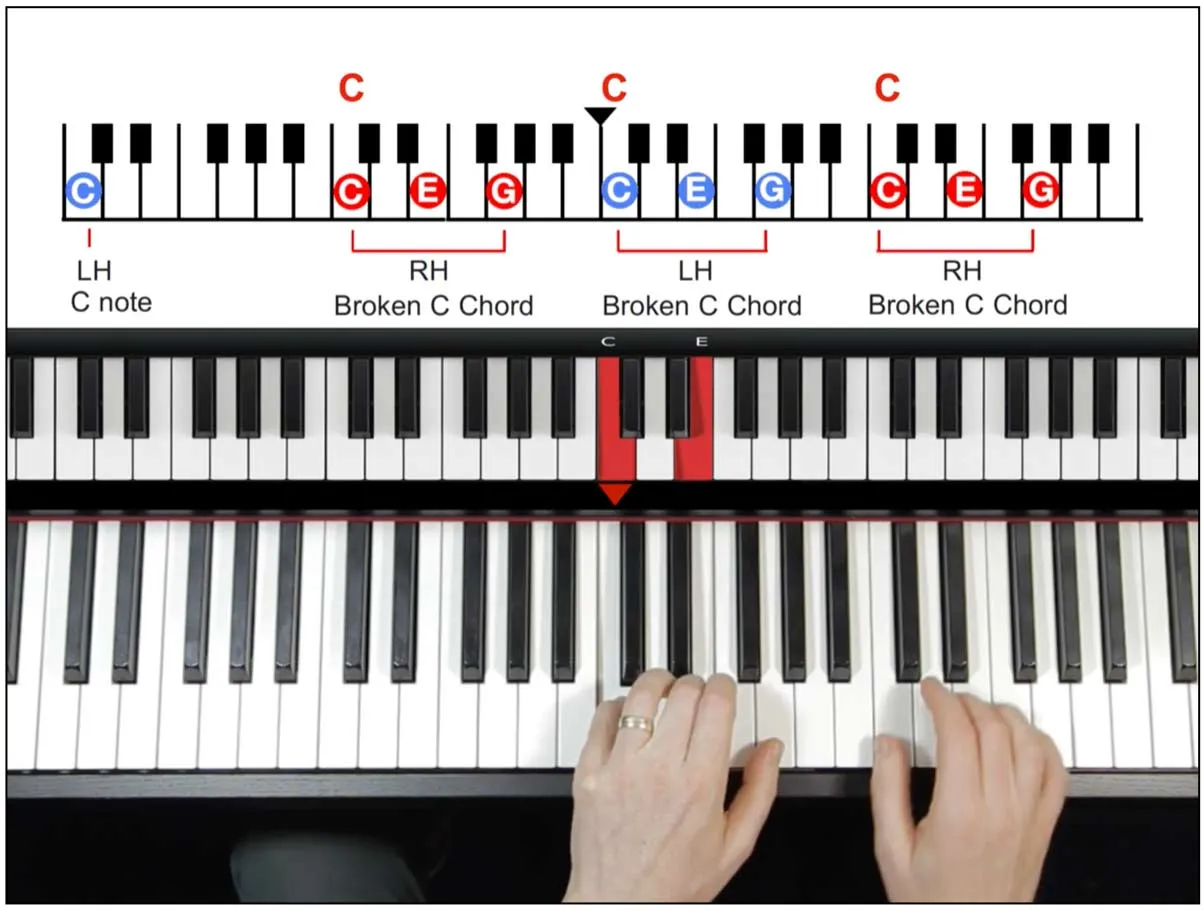
Robin shows a chord shape on a keyboard diagram and on video. You hear it on audio, then play it in a rhythm with both hands.
Learn
Once your hands know it, you learn the chord’s name, how it’s built and where it turns up in songs.
Understand
You see how chords, keys and rhythms fit together, and use them in new songs and your own ideas.
Shapes and patterns
You learn to see the keyboard in shapes
Every major chord has the same shape. So does every minor chord. Once you see that, you’re no longer memorising hundreds of separate notes. You’re moving a handful of shapes around.
Robin uses colour-coded diagrams, cartoons and memory tricks to make those shapes stick. He trained as a cartoonist, and it shows: the explanations are visual first and wordy second.
Hear the idea
A shape you can move
Pick C, then Am, then F. Your right hand barely moves: only one finger changes each time. Small, easy chord changes like these are the first thing Pianoforall teaches, and they’re why beginners sound like they’re playing real music so early.
Tap the chord names on the keyboard to see and hear them.
Try it
C major C · E · G
Tap a chord to see and hear it. The right hand stays near middle C, so some chords show as inversions. left hand right hand
By ear, then by eye
Playing by ear and reading music
Because you learn chords and rhythms by sound, you start to recognise them in songs you hear. That’s the core of playing by ear: hearing a progression and knowing roughly where your hands should go.
Reading comes in gradually. By Book 8 you work through classical pieces from sheet music, and the notes make sense because you already know the chords underneath. Students who already read find the reverse: chord knowledge makes their reading faster.
How to play piano by earSmall steps
One new idea per lesson
Each lesson adds one thing: a new chord, a new rhythm, or a new way to combine them. The videos are short, so you can watch a lesson, practise it for twenty minutes, and stop.
There’s also some mindfulness in the course. Robin is a therapist as well as a teacher, and he reminds you to notice tension, drop your shoulders and slow down. Relaxed hands learn faster.
You can repeat any lesson as often as you like. Nobody is waiting for you to get it right.
I have just completed my degree in Music at the local college. The knowledge I gained from your course is largely responsible for my having the highest marks in Music Theory I and II. … you teach first how music is put together (how chords are formed and the rhythms in which to play them) and then talk about reading.
I have been trained to read sheet music and like a robot to translate what is written in physical motions at the piano. … I’ve been working on the rhythms in book 1 these days … just practicing your book 1 for one week improved my Bach and Mozart in an amazing way and even my teacher is amazed at how more rhythmically precise and clean they are.
Questions about the method
Do I need to read music?
No. You start by watching, listening and playing chords and rhythms. Reading comes in gradually, and Book 8 takes you through sheet music properly once the notes already mean something to you. You finish the course able to play by ear and read.
I can already read music. What will Pianoforall teach me?
Chords, rhythm patterns, playing by ear and improvising: the skills many classically trained players never picked up. Students who can read often move through Book 1 quickly and get the most from the inversions, ballad, blues and jazz books.
How long do I need to practise each day?
About 15 to 30 minutes. Robin recommends short, regular sessions over long weekly ones, because your hands learn new movements between sessions. Many students find they practise longer because they enjoy it.
Do I need to connect my keyboard to a computer?
No. Pianoforall doesn’t listen to or analyse your playing, so you don’t need cables, MIDI or a microphone. You watch and listen on any screen and play along on your instrument.
How is Pianoforall different from apps like Simply Piano or Flowkey?
Most apps listen to you play and score you as notes scroll past. They suit people who enjoy game-style feedback and learning song by song. Pianoforall teaches you how music fits together, through chords, rhythm patterns and playing by ear, so you can work songs out yourself. It is also a one-time purchase rather than a subscription.
See the method for yourself
Get all nine books for one payment of $49. If it isn’t right for you, ask for your money back within 60 days.
- $49 once, no subscription
- Lifetime access
- 60-day money-back guarantee